Sunday, December 17, 2017

Forge

Forge by Laurie Halse Anderson

Forge picks up where Chains leaves off, which Curzon and Isabel in the middle colonies after they fled
New York City,. This book is told from the point of view of Curzon, who accidentally finds himself in a regiment of American troops who hole up at Valley Forge for the winter.

This is another well-told tale. But, as with Chains, what I liked about it most was the fact that it does not participate in the veneration of the so-called patriots that eventually earned our nation its independence. Rather, it takes great pains to point out their hypocrisy, as many of the men who espoused freedom and liberty also held hundreds of people in bondage -- and failed to see that contradiction. At the very least, this book will make you think differently about who in the American revolution should be considered heroes.

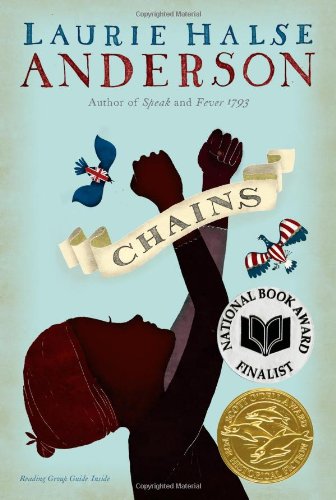
Chains

Chains by Laurie Halse Anderson

Chains tells the story of a young woman caught up in one of our nation's most troubling paradoxes: A
commitment on on the one hand to equality for everyone and a firm belief on the other that people of color are not part of the "everyone" that deserves equality, so much so that we for centuries held them in bondage.

The novel takes place at what could have been a national reckoning of that paradox, but, sadly was not. The main character, Isabel, finds herself sold from a Rhode Island farm to the household of a Tory sympathizer on the eve of the American Revolution. The slave community in New York City, where Isabel finds herself, is split on the question of which group -- the British or American rebels -- would be best for black Americans, and Isabel is forced to put her lot in with one of the groups.

I very much enjoyed this historical piece, for a number of reasons. It was, first and foremost, a lively read. But equally important, it shines a light on a little-known period of American history. We all too often think of slavery as a "southern" issue, when in fact it was at the economic heart of all of the colonies. So too is the political role slavery played in our nascent nation rather underappreciated. When I was in college, I read a book by the scholar Edmund S. Morgan called Slavery and Freedom. It makes the argument that elite whites used racism and increasingly hostile treatment of black slaves as a way to control the white population, whose social and political status rose as the status of the black people around them fell. This book makes that relationship between our unique political system and slavery quite clear and in a way that is accessible to young readers. Well worth the read.

Sunday, November 12, 2017

Ghost

Ghost
By Tim Reynolds

Ghost tells the story of Castle Crenshaw, who one day winds up on an elite New York City track team, which he tells to call him "Ghost", I think to highlight that kids like him -- underprivileged and underserved -- aren't really "seen" by our society. Anyway, Ghost turns out to be a heck of a sprinter, and track winds up putting him on the straight and narrow path that we can only assume will lead to a better life for him in the future.

I really enjoyed the story. But I do wonder about it's message. I'm always skeptical about the teacher or coach-as-hero narrative. As if one person can totally turn around another person. And as if that is what we teachers/coaches are supposed to do. And what about the fact that it is athletics that save this kid? In reality, it's going to be basic literacy skills -- reading, writing, speaking and listening -- that will mean success later on. It seems like the school figures in this story are an impediment to progress rather than a vehicle for it. I, obviously, object to that. I'm trying to engage students in the world of economics, society, and politics the same way the coach in this story engages his pupils in track. But why are athletics so much more valued by students -- and society as a whole. It needs to change!

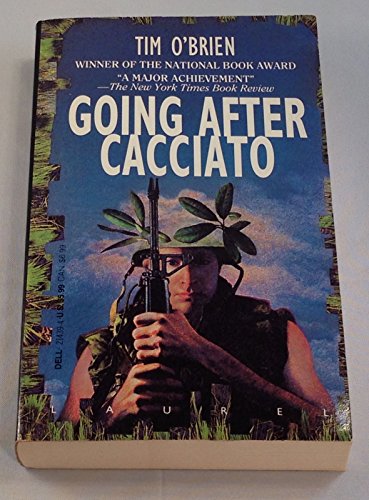
Going After Caciatto

Going After Caciatto
By Tim O'Brien

I was so impressed by Tim O'Brien's The Things They Carried that I wanted to continue hearing his voice. So I picked up this novel, which won the Pulitzer Prize in the 1970s. The two are definitely different books. Going After Cacciato is quite surreal. It features a group -- squad? platoon? unit? -- who goes after a soldier named Cacciato, who simply ups and leaves the Vietnam War one day, claiming he's going to march to Paris. You'd think that Cacciato would be the main character, but he's not. Instead, it's Paul Berlin, who seems, based on The Things They Carried, to be much more like the author than Cacciato. What ensues is a crazy story of a march through Asia -- or is it a march through the mind? In the end, I enjoyed the book, but it was not nearly as poignant as O'Brien's other, much more famous work. Either way -- war is crazy.

Sunday, October 29, 2017

Harry Potter and the Sorcerer's Stone

Harry Potter and The Sorcerer's Stone by J.K. Rowling

So this is Harry Potter, eh? Okay. Not bad, not bad. But not great. Certainly not great. I'm not exactly
sure why so many people are so enamored with this book, even a decade or so after its first publication. It's engaging and all, but...

The Things They Carried

The Things They Carried by Tim O'Brien

I was deeply touched by this series of essays about the author's time in the Vietnam War. He grapples
with really big ideas, ideas that I hadn't thought of -- perhaps because his life story and mine are so different. I don't think we started out that dissimilar: good at school, a future of our own choosing. The difference is, he got drafted and I will never have to face that reality. It differs even from my father's story; he, who volunteered for the Air Force at the same time, both to avoid the combat O'Brien writes about and to see the world. His big story from the war involves the amount of effort and sweat it took to climb to the top of his bunk in Vietnam's oppressive heat. A far cry from O'Brien's story about killing a man. Then again, did he kill a man? That's the wonderful part about the book. It makes clear the difficulty of telling fact from fiction when confronted with such memories. Though the same might be true for all of us.

Monday, September 11, 2017

News of the World

News of the World by Paulette Jiles

This book takes its title from the occupation of the main character, Cpt. Kidd, an army veteran in post-
Civil War Texas who rides from town to town charging auditoriums full of people a dime to hear him read news from far-flung places, made possible only recently by the advent of the telegraph. I'm fairly certain that the profession was real, and it was something I hadn't heard of before. Kidd's humdrum existence is upended when, at one reading, a friend passes off to him a little white girl who had been kidnapped four years earlier by the Kiowa; his mission becomes to return the girl to her aunt and uncle in a little town near San Antonio. Adventure ensues! So too does compassion and empathy as the old man -- Kidd is in his 70s -- works to help the young girl, Johanna, adjust to white society in the kindest way possible.

This was certainly an interesting, captivating read. But the ending -- oh, the ending! This is the second book in a row in which the ending was just too tidy, too happy, too redemptive. Do things really work out like this in real life? Is sorrow and disappointment not a part of the human condition? It was strange to hear the book's tone change so radically near the end. I wish it had ended more abruptly many pages earlier.