Saturday, December 31, 2022

How the Light Gets In

How the Light Gets In
By Louise Penny

Thought I'd end 2022 with a return to Louise Penny's page-turning Armand Gamache detective series.
This one is set at just about Christmas time, to boot.

There are three conflicts going on in this one. The event that brings Gamache back to Three Pines is the murder of Constance Ouellett, a member of the once-famous Ouelett Quints -- the first documented case of a successful quintuplet birth in the world. Raised in the public eye by the government. Constance and her sisters retreated to privacy in their last years. But Constance could not retreat from the trauma of her past, and had taken to seeing a therapist in Montreal. This turns out to be Myrna, the bookshop owner of Three Pines. Constance visited her old therapist/friend in Three Pines in December, with plans to return for Christmas. When she doesn't, Gamache returns to the village.

He brings with him some baggage of his own. His once-right-hand-man, Jean-Guy Beauvoir, is not with him. Instead, he's been transferred out of the Surete homicide division -- and, after a divorce from his daughter Annie following a return to addiction (Oxycontin), Gamache's life. Almost. Gamache is there in the wings, doing a little more than hoping for Beauvoir's recovery and return.

And then there's the "grand scheme", a plot by the head of the Surete and, it turns out, the minister of Quebec. It takes most of the book to learn what this scheme is; Penny is pretty heavy-handed on the foreshadowing and suspense. But it turns out that the two have for years failed to perform basic repairs and upkeep on Quebec's infrastructure, pushing it toward failure in the hopes they can pin the ensuing disaster on the Canadian government and ride a tide of independence fever to more power than they already have. The pair know that Gamache is working to foil them, and they are the ones responsible for the gutting of Gamache's department -- and Beauvoir's additction.

Gamache, though, has some aces up his sleep, too. And, once again, he outsmarts and outworks his opponents to victory. Don't think that's much of a spoiler. 

If mac'n'cheese is comfort food, the Gamache series is a comfort book. What fun to return to Three Pines and its cast of close-knit characters. Till next time... 

Wednesday, November 30, 2022

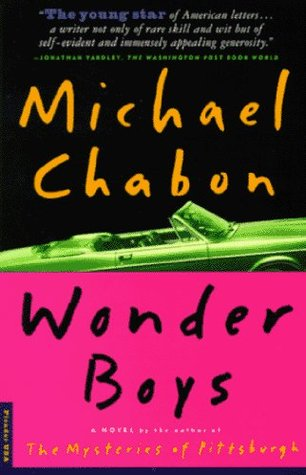
Wonder Boys

 Wonder Boys

By Michael Chabon

Wonder Boys was one of my favorite movies in my late teens and early 20s. It features Toby MaGuire,
Francis McDormand, Robert Downey Jr. and Michael Douglas. I'd always known it was based on a book, and came across it one day while visiting the library with some students and thought I'd check it out to see how well it conformed to the book.

It turns out, Wonder Boys is an ideal example of what people mean when they say a book is "cinematic". From what I could tell, the screenwriters of the movie barely had to change a thing. The dialogue, the scenes, the setting -- it was all there in the book. It was, in fact, just like watching the movie again. There were, of course, small differences. Grady Tripp's physique -- he's no small, svelte Michael Douglas in the book -- is one. We also learn much more about Grady's future-former wife, Emily, who, it turns out, is adopted, from Korea, into a Jewish family that moved full time out into the Pennsylvania countryside after the patriarch's retirement. 

I do wish I'd come across Chabon's book first. I think I would have liked it a lot. And it would have allowed me to create pictures of the characters in my head. As it was, all I could picture were Michael Douglas, Robert Downey Jr., Frances McDormand, and Toby MaGuire. All well. I need to read more Michael Chabon.

Wednesday, November 23, 2022

The Last Revival of Opal and Nev

 The Last Revival of Opal and Nev

By Dawnie Walton

This is the story of an interracial rock duo from the 1970s -- as well as the magazine-editor working to tell


their intertwined story. Nev is a British songwriter trying to find an electrifying partner when he stumbles upon Opal in a Detroit nightclub. It is Opal's sister who has the voice, but she who has the panache of a star. The two put out a record that is destined for obscurity until one night when their record label puts on a showcase of its talent headlined by their one hit-maker, the Bond Brothers. This southern-rock band attracts an audience of Hell's Angel-like bikers who are obscene and loud -- and riotous when Opal, who has been eyeing warily the Confederate flag the Bonds like to use as a prop at their show, reveals that she has stolen it and gathered it around her like a diaper. A picture of a wounded Nev hauling an even more wounded Opal out of the theater makes a splash in the Times and Opal and Nev ride the attention to a new record, fame, and a small fortune.

Oh, and the drummer for the band, Jimmy Curtis, is killed in the melee. He happens to be the father of the editor/reporter hoping to tell Opal and Nev's story ahead of a reunion tour, LenaSarah "Sunny" Curtis. The book switches back and forth between interviews with Opal and Nev, Sunny's narrative, and other bits of media, all of which are designed to make the book read like the "real" thing; there are even footnotes. In her research, Sunny interviews the sole surviving Bond brother, who claims it was Nev who told his drugged up former self that Opal had stolen his stars and bars and started the riot that night. It's a fact that has the potential to blow the Opal and Nev reunion tour up -- if anyone believes it. It also provides a window into an exploration of the role that race and gender play in the music industry (and world as a whole). 

All in all, I found this to be an engrossing book. I wonder, though, whether its realism adds to it or detracts from it. The series of events are so tied to real events that it sometimes felt tedious to re-read them. I was certainly ready for it to be done when it was over.

Tuesday, November 1, 2022

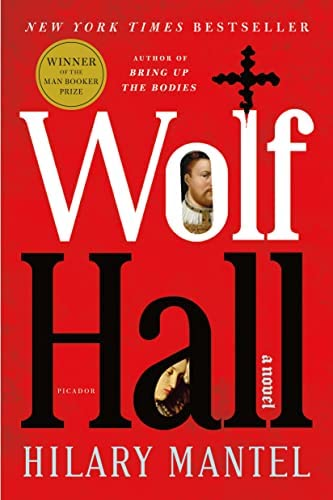
Wolf Hall

 Wolf Hall

By Hilary Mantel

I picked this up after hearing of Mantel's death. I'd picked it up before at my parents' house, and was
surprised to find its beginning pages far more interesting than I'd imagined. It follows the rise of Thomas Cromwell -- not the other famous Cromwell, Oliver -- during the reign of Henry VIII. It was a time of great societal change in England as Henry's failure to produce an heir with his wife, Catherine of Aragon, and his wandering heart led him to an impasse with Pope Clement that ultimately produced the English Reformation. 

Cromwell's position of power in guiding these affairs was surprising given his "low" birth. He was the son of a blacksmith whose violent beatings sent the younger Cromwell fleeing to Europe, where he served in various armies. When he became Henry's master secretary, he became the first person without a "noble" birth to hold such a position, and it seems as though Cromwell's suspicion of a system that ranks people based on their ancestors parallels his thoughts about papal power. Mantel, I've read, has also reimagined Cromwell, who, though I'd never heard of him, was traditionally depicted as conniving and power-hungry. Mantel's Cromwell, meanwhile, is generous and tolerant and wise.

What struck me in reading the book was just how much a hold Christianity had on people back in the 1500s. Henry's excommunication and subsequent break with Rome seemed to cause an international crisis. Meanwhile, people are being burned at the stake for translating the Bible into English. Everyone is so darn certain of their afterlife in heaven that they are willing to die for their support of this or that interpretation of religion. Then again, one wonders if we have now replaced religion with something else. Republicans across the nation, after all, have plotted violence against Democrats. Or maybe it is that people susceptible to religion are predisposed to follow blindly, though I know that is an ungenerous characterization. 

Whatever the case, I will say that by the end of this book's 600 pages, reading about the political machinations of 16th-century England became a bit...tedious. The problem with historical fiction is that the outcome is usually known. It seems like getting there could take fewer pages.

Sunday, September 25, 2022

Olympus, Texas

 Olympus, Texas

By Stacey Swann

Finally got a school-year book under my belt. Been a bit slow going now that I'm back to work. So little
brain power left at the end of the day.

I picked up this novel almost solely based on the fact that it had an endorsement blurb on the front from  Richard Russo, whose Straight Man I still remember as laugh-out-loud funny -- and which I just learned is about to be turned into a television series. Go figure. Anyway, based on Russo's "Wildly entertaining" comment, I thought maybe this was a book in his vein of humor.

I can't say it was that, exactly. The book shines a spotlight on a prominent family in the tiny Texas town of Olympus. The family is dysfunctional. Peter, the patriarch, was in his past a serial philanderer who fathered several children with women other than his wife, June. She lives in a constant state of anger and wondering about whether the choice to stay with him was the right move for her and, more importantly, her family. One daughter, Thea, clearly thinks it was not. She has moved to Chicago in an attempt to escape her family and seethes contempt when around her mother. Others say it contributed to the horrific choice by her other son, March, to sleep with the wife of his brother, Hap, whose reputation as kind and forgiving some call a sanctimonious relic of his mother's silent suffering. And then there are Artie and Arlo, twins by Peter's affair with a spineless woman named Lee.

All of these issues come to a head when March, exiled after his affair, returns to town, which seems to set into motion an otherwise unthinkable tragedy. Arlo, jealous of his sisters newfound relationship, dares her to shoot at a faraway object in the river, which he knows to be her beau but which she thinks might be a rabid skunk. Before Arlo can reveal his subterfuge, the shot is taken -- and it hits its mark. Who is to blame, really? Peter? June? Arlo? March? And what does it mean to forgive? And what does it all have to do with the ancient Greeks?

I did appreciate this novel, though I will say it caught me at an inopportune time. The beginning of the school year is not a time to pick up a Greek tragedy, particularly if you are expecting it to be a comedy. Then again, maybe the difference between the two isn't as much as we all might hope.

Saturday, August 6, 2022

Black Buck

 Black Buck

By Mateo Askaripour

This novel follows the rise and fall of Darren Vender. At the beginning of the novel, Darren, who


graduated valedictorian from one of New York's most prestigious high schools, is a manager at a Starbucks. Though he is told frequently by those around him -- his mother, girlfriend, friends, neighborhood personalities -- to "make something of himself" he is content to bide his time until an "opportunity" presents itself. And then one day it does. On a whim, Darren makes a sales pitch to a startup executive/coffee shop regular, which leads to a job offer at Sumwum.

Given the environment at Sumwum and what it does to Darren, it is unclear whether the new job represents a rise or a fall. Darren is given a new name, Buck, a nod to his previous employer, and, after passing hell week, embraces the culture of the company whole-heartedly. One by one, his ties to his past are severed. And then his mother dies of cancer that she hid from him for months. In a rock-bottom moment, Buck kicks out a long-time tenant for keeping the details of his mothers' illness a secret. 

And then Buck climbs back up. He begins mentoring other young people of color in the ways of sales as a way to better their lives. Soon it is a movement -- Happy Campers. In the book, all around the world, people of color help each other find and fit into sales jobs. Buck's friends come back. And then figures seeking revenge bring Buck down again. Or do they? He is set up to take the fall for a drug sale and winds up in prison. But he claims to be freer than ever before. 

This book was certainly engrossing, but grating at the same time. I appreciated the author's voice, particularly those moments when he interrupted the narrative to speak directly to the reader, as in, "Reader: Hell hath no fury like a white man scorned. Especially in the world of business. If you're going to do something to piss them off, be prepared for them to strike back sooner or later." But the ups and downs of the book were so predictable, it was like watching a slow-motion car crash. You knew trouble was only a page away. It made me anxious to read. I know it was satire, but it was also pretty fantastical. Satire only really works when it is grounded in reality, and I think this book veered a bit too far from it to be real. 

Tuesday, July 26, 2022

The Adventures of a Girl Called Bicycle

 The Adventures of a Girl Called Bicycle

By Christina Uss

There's really only one word to adequately describe this book, and its one I'm a bit loathe to use, but here


goes anyway: charming. I know -- cringe. But hear me out. It's true.

The eponymous girl in question is left at a young age on the steps of a religious order called the Mostly Silent Monks. Their ethos is that it is better to listen than speak, so they have reduced their verbal communication to a mere eight words, the most expressive of which is, supposedly, sandwich. All of this near silence suits Bicycle quite well, which worries her main caregiver, a retired nun named Wanda, because the young woman seems averse to friendships with kids her own age. Her solution: A summer stay at the Friendship Factory, which guarantees -- guarantees! -- three friendships by the end.

The prospect of spending time at such an institution is more than Bicycle can take, so she sets off on a cross-country bicycle trip to the Blessing of the Bikes in San Francisco, where she hopes she can befriend her bicycling hero, a Polish star named Zbig, and prove to Sister Wendy that she does need Friendship Factory. Her journey is filled with adventure. She meets a Civil War ghost named Griffin G. Griffin who decides to haunt her bike and ride back to his hometown in Missouri. She helps a cafe owner develop a business plan, rescues a racehorse from the Kentucky Derby, loses her bike, buys a new technologically advanced bike at an auction, escapes another Friendship Factory, and finally, finally makes it to the Blessing of the Bicycles, where Wanda is, finally, convinced that Bicycle can, indeed, make friends.

So, why charming? It's partly the steadfast earnestness of the narrator. It's also the fact that the author inserts just enough whimsy. The whole ghost-inhabiting-a-bike thing could be borderline stupid; but she makes it work. Sure, there are parts that are a little over the top -- a scientist studying luck is invited to a fictional country with incessantly bad luck -- but for the most part it all works. And it is so upbeat. Even the downs make you smile. It was just what I needed at this moment.