Tuesday, April 29, 2025

The Mona Lisa Vanishes

 The Mona Lisa Vanishes

By Nicholas Day

What a wonderful book! Erin gave it to me after I finished my last book. I will say that I'm not usually one
for nonfiction. I need story! But this nonfiction book had it in droves. It unfolds like a classic who-done-it, alternating between the mysteries of Leonardo da Vinci in Renaissance Italy and the disappearance of his painting 500 years later or so. It also tells a great tale of life in the early 1900s, which seems so distant from now but was, much like today, a time of rapid technological growth and societal change. 

Thursday, April 17, 2025

Peace Like a River

 Peace Like a River

By Leif Enger

I saw a book by this author in our school library. I'd never heard of him, and on the flap it mentioned that it
was a follow-up of sorts to his best-seller Peace Like a River. So rather than risk the new book, I went back to the old one to see what it was like.

It was quite the departure from the last novel I picked up, Martyr!. That one was wonderful, but also frenetic and chaotic and anxious. This one was, in contrast, quite peaceful -- despite the air of violence that envelops it.

The book tells the story of the Land family. They are nothing if tight-knit, turning their hardscrabble, rented house in western Minnesota into a veritable home. They would be the typical "all-American" family if not for two facts. First, the mother of the family has abandoned them, too disappointed in her husband's decision, made after taking a ride in a twister and emerging unscathed, to cease his studies to become a doctor in favor of janitoring. And second, this little sojourn in the tornado has somehow bestowed upon the elder Land some mystical, if not God-like qualities. He can, in fact, occasionally and, it seems, accidentally perform miracles. One day, he wanders off the edge of a porch and continues walking into midair. On another, his touch heals the face of the man in the act of firing him. 

The cozy domestic scene, however, is disrupted one evening when the eldest boy, Davy, lying in wait for two ne'er-do-well teen aged enemies, kills them when they enter the children's bedroom brandishing a bat. It would seem like self-defense, except he walks up to one of the boys writhing in pain on the floor and shoots him in the head like an injured horse. 

Davy is hauled off to jail, charged with manslaughter, and put on trial. Which doesn't go all too well. So Davy decides to up and leave. When the police can't find him for days, the rest of his family does the same, using a recently-inherited Airstream trailer to try to track Davy down. Somehow, they end up at a farmhouse gas station run by a woman named Roxanne in the badlands of North Dakota. There they -- well, only the book's 11-year-old narrator Reuben -- find Davy, and Jeremiah Land finds a beau. Rube takes several midnight rides to Davy's hideout, which he shares with a shadowy, dangerous-seeming fellow named Jape. Rube is happy to keep these rendezvous secret until he learns that the policeman pursuing Davy, to whom Rube and the family had eventually taken a liking, has located the hideout and plans to try take Davy there. Rube knows Jape won't like that, and will probably kill the policeman. So he blabs, and leads a posse of local ranchers there.

They are too late. The cabin is empty, save for the lawman's hat, which is not a good sign. Davy is gone. The family, however, is newly buoyed  by the fact that Roxanne will be joining them -- permanently. They had back to Minnesota, where there is a wedding and a move into a new home. Things are looking up. Then Davy returns. Unbeknownst to him, Jape has followed. And when Davy goes to leave, there is violence. Rube is shot. So is Jeremiah. The former's wound appears more serious. But Jeremiah is a miracle worker, and trades his life for his sons's.

Reading this book was like wearing a warm blanket on a cold day. Its prose, even in the tensest of moments, was just so earnest. It had me returning in my head to my Grandparent's house, to my own childhood when I was unencumbered by responsibilities. I read it in almost a dreamlike haze. I think I happened upon it at just the right moment.

Saturday, April 5, 2025

Long Island

 Long Island

By Colm Toibin

The second novel following the life of Irish immigrant Eilish finds her facing a crisis. Her husband, Tony, a
plumber, has had an affair with one of his clients' wives, and she is pregnant. Soon, the husband comes to Eilish, and, in grand and angry fashion, declares that he will be depositing the baby on her doorstep, so she better get ready to raise it.

She isn't. She draws a line in the sand with her husband, but it isn't Tony that she has to deal with. The life they have carved out for themselves on Long Island includes a small compound with homes for Tony's parents and siblings all on the same plot of land. At the beginning of the novel, Eilish had made a sort of peace with this somewhat stifling environment. But her mother-in-laws' control over the family, including the fate of the unborn child, is too much for Eilish to take. She has made it clear to Tony: the baby or me. But Tony, it turns out, is more afraid of his mother than his wife.

Eilish flees to Ireland, using her mother's 80th birthday as an excuse. She hasn't, in fact, seen her mother in decades, though she has been sure to send monthly updates on her family. Their reunion isn't exactly a happy one. Eilish's mother refuses to ask her about her life in America, and is as rude and controlling as her mother-in-law. But things begin to thaw when Eilish's children arrive. Her mother softens, taken with her daughter Rosella, and Eilish begins to see that she could have a life separate from Tony.

It is then that Eilish rekindles a romance with Jim Farwell, a local pub owner with whom Eilish had something of a fling many years before, when she had come home for her sister's funeral a secretly-married woman. She never told Jim of her elopement, and he was sure they would marry. Then she abruptly left for the US, and had no correspondence since. Complicating matters was that Jim is on the cusp of something like a new life. He, after years of bachelorhood, has found a partner in Nancy, Eilish's once-best friend, and they have decided to marry.

But Jim cannot resist Eilish, who knows nothing of his relationship with Nancy. It is something like a reversal of Eilish's previous visit. Except that Jim is eager to leave Nancy and start a new life with Eilish. It is not to be. Nancy finds out about the affair and, without letting anyone know she knows, ends it by revealing to the whole town that she and Jim are engaged. He will have to stay after all.

The back of the book describes it as "quiet", but I didn't find it that way. Perhaps it is because of my own life stage that I found it excruciatingly intense. To me, Eilish's return totally upended the lives of the people of Enniscorthy just as they were about to find some sort of peace -- just as she had done before. I wonder if the whole series is some sort of meditation on the disruption that mass emigration played on Ireland and its villages. It seems as though, in this case, it threatens to tear them apart, both because of the loss of people but also because the people who remained can't help but wonder whether they made the right decision. Just like the people who left. 

Monday, March 24, 2025

Martyr!

 Martyr! 

By Kaveh Akbar

Death is a constant in the life of Cyrus Shams. His mother died when he was an infant, her plane, mistaken


for a fighter jet, shot down by the US Air Force. Some 20 years later, his father followed, though he was dead in many ways before his body expired. Cyrus seemed destined to die young too, and made something of a past time of consuming substances -- anything, really -- that seemed sure to accelerate this process.

Until. One day, out of his mind on something, a bulb hanging from his ceiling blinks, and when he wills God to make it happen again, it does. Henceforth, Cyrus becomes sober. But sobriety can only take him so far. He is convinced that his life has no meaning and, from the outside, it's a bit hard to argue with him. He is a perpetual student, a writer who barely writes with no real plan or aspirations for the future. Yet he yearns to imbue his life with purpose.

Then the bulb blinks again. A show opens at the Brooklyn Museum called Death Speak in which an artist, Orkideh, who is diagnosed with terminal breast cancer, sits in a room and speaks with whoever wishes to about life and death. Here, thinks Cyrus, is a woman whose death with have meaning. He launches a writing project about martyrs, flies from Indiana to New York, and meets with her regularly. He is surprised when she goes out of her way to invite him back, and so he returns two days in a row. She hints at knowing something about his mother and her death, which spooks him. He ruminates on it -- how could she know? -- and vows to ask her about it the next day.

Except the next day, Orkideh is dead. Twice. Once when her body expires, and once when Cyrus learns the truth about who she is: his mother. She had been trying to leave Iran with her lover, who took on her identity to fly out quickly to escape her more acutely intolerant and intolerable husband. When the lover dies, Cyrus' mother leaves anyway and builds a new life for herself in New York. Without Cyrus.

Suddenly, Cyrus' whole world view crumbles. His mother, who he had thought died a meaningless death, actually died what he considers to be a meaningful one. They coexist at the same time. Or do they nullify each other? 

It is enough of a twist to shock Cyrus out of his self pity and into the world, perhaps for the first time. 


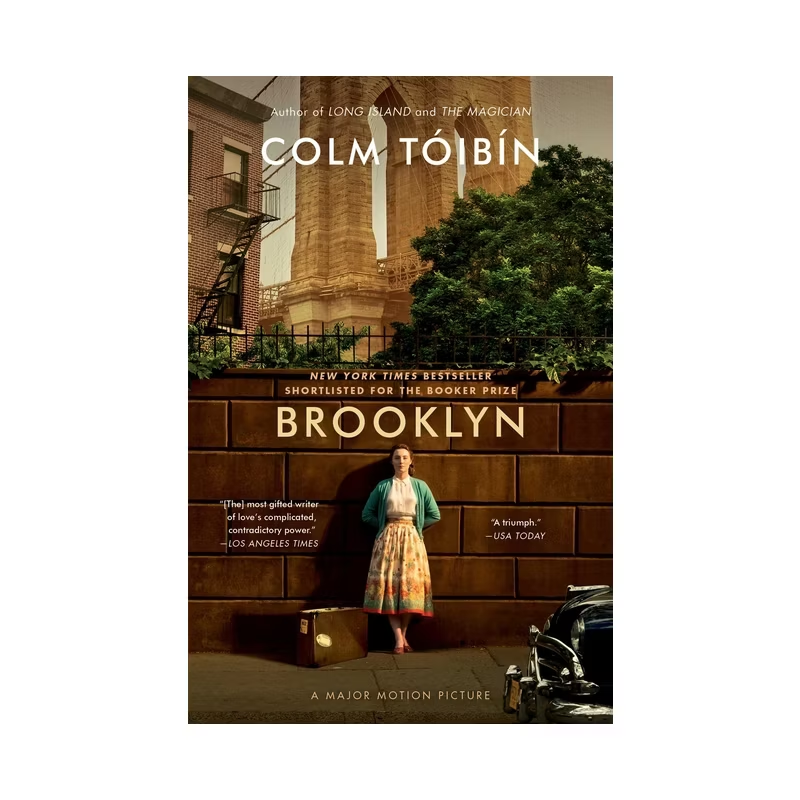
Brooklyn

 Brooklyn by Colm Toibin


Sunday, March 9, 2025

Lazarus Man

 Lazarus Man by Richard Price

Can't say I thought a whole lot about this one. The title refers to the main character, whose life takes an


abrupt turn when he is found alive in the rubble of a collapsed building after 36 hours under a chunk of concrete. Miraculously, or so we think, he emerges unscathed. He becomes something of a folk hero, who is sought out to give speeches. He finds that he has something to say, and that he can express his thoughts in a way that moves people. He is a new man, and is able to move on from a downward spiral of a life that had descended into cocaine addiction. Turns out, though, he is something of a fraud. Footage of the collapse taken by a camera-obsessed local resident spots him running about in the immediate aftermath. So how did he end up under the concrete? He was tired, and lay down. Nevertheless, his words are true, and they help various other characters rise from the ashes of their own train-wrecked lives. 

I found this book a bit plotless and predictable.

Sunday, January 26, 2025

In the Distance

In the Distance

By Hernan Diaz

My 150th entry! It took a little longer to get here than I anticipated, but a milestone nonetheless.

I picked this book up primarily because of how much I enjoyed Trust, the last book I read by this author. That work felt a lot like a crossword puzzle, which I find myself trying to unlock more frequently of late. It featured basically the same story told from four different, sometimes intertwining, points of view. It's not an uncommon method, but the way he wrote it made it take a while to figure out what was going on. And even by the end, you don't really know who to believe.

This book was much different, but no less interesting and, at times, riveting. It is, as the dust jacket explains, a book that "defies the conventions of historical fiction and genre." It is a tale of the settling of the west, with a twist. The main character, Hakan, or The Hawk as he becomes known, wants desperately to get east. After setting out with his brother from Sweden, he somehow becomes separated and winds up on a boat bound not for New York City but for San Francisco. When he arrives there, he becomes determined to reunite with his brother and takes up with an Irish family in search of gold. Against all odds, they find it -- only to have it stolen from them by a powerful woman from a nearby town who takes a liking to Hakan and keeps him as something of a sex slave.

He escapes, and spends much time wandering the desert, taking up with a scientist in search of the first signs of life on planet earth in the salt flats around what I can only assume is Utah. The scientists' help becomes tired of the desert mission, and, when he stops to give assistance to a recently-attacked group of Native Americans, they leave him. Hakan stays, and for his efforts he is gifted some medical training and tools, as well as a horse, which makes his journey much faster.

Eventually, he runs into settlers on the Oregon trail. One day, he is offered another horse, this one strong and healthy, if he would only serve as a bodyguard to a confidence man who has somehow convinced many settlers that he has land in Oregon that he can give them, which prompts many to shower him with gifts from their meager possessions. One day, they run into a band of Native people, or so they think. In fact, it is a ruse; a group of "brethren" (Mormon's?) who pretend to be Native and then change clothes to chase them off. The settlers fall for it, and welcome the "heroes" into their wagon circle. Whereupon they are fired up on indiscriminately. Hakan, who is an enormous human, reacts quickly, and almost single-handedly defeats the brethren. 

Word of his deed spreads far and wide. He is a hero! He is a villain! He goes into hiding. For years, his legend grows outside of his isolation. He grows too, never stopping. He is, it seems, the embodiment of the western tall tale, growing taller with every telling. Even years and years after the event, he is recognized and almost taken captive once more. He manages one more escape, does a kind deed for a fellow Swede who has come into wealth and funds a trip to a place where he won't be recognized: back home. 

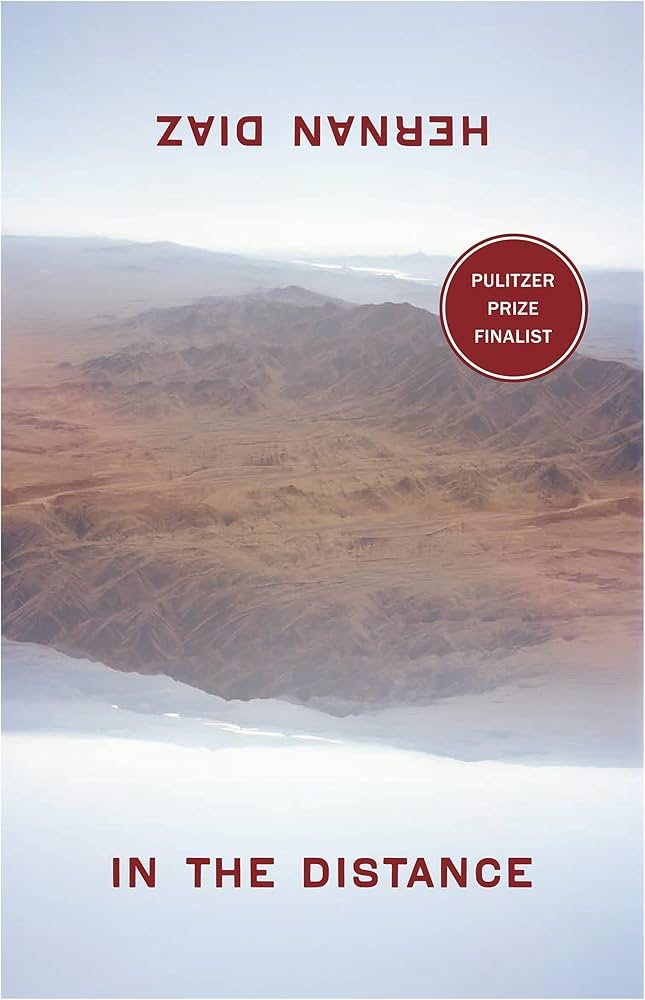
The cover of the book is a mirror image. A mountainous desert landscape above; the same desert landscape below. I will admit that I was a bit too involved in the plot of thee book to fully consider its message, but that image seems a key to it.