Saturday, November 24, 2018

The Benefits of Begin an Octopus


Image result for benefits of being an octopus

The Benefits of Being an Octopus
By Ann Braden

This is no nature story. Instead, the octopus in the title is an extended metaphor for our main character, Zoey, who uses the animal as inspiration for what it will take for her to survive and escape the poverty that is holding her family captive. The story is set in Vermont, and offers an oft-overlooked view of our generally well-to-do state. When the story opens, things appear as though they are looking up for Zoey: After years of chaos, her family -- a mom and three younger siblings -- have found stability in the home of a new boyfriend, father to the youngest member, Hector. But things aren't as good as they seem, and the tension at home spills over into Zoey's life at school.

As a teacher, this book obviously had me reflecting on my students, some of whom have stories very similar to Zoey. How can we help make school a sanctuary for these students, a place of stability and source of confidence they need in their lives? How can we help them to see education as a possible way out? How can we help ensure that socioeconomic gaps outside the classroom don't cause inequity inside the classroom?

In the book, Zoey has one teacher who serves as a kind of messianic figure for Zoey. She unflaggingly believes in Zoey and pushes her to take the risks needed for her to reach her potential in school (and out). I'm always conflicted about this kind of portrayal of teachers. It's inspiring to think we can have this kind of impact on students. At the same time, it's pretty unrealistic and ignores all sorts of challenges and obstacles that get in the way of "saving" students like Zoey. Am I doing enough for the Zoeys in my classroom? What else could I be doing?

In the end, this was a pretty great read. I couldn't put it down. The author does a great job of continually raising the stakes in the story. Whatever its flaws, the book provides an important perspective about the struggles many young people face every day -- and shouldn't.

Sunday, November 18, 2018

Angela's Ashes


Image result for angela's ashes

Angela's Ashes by Frank McCourt

In this memoir, the author tells the story of his childhood growing up in Limerick, Ireland. Though he was born in New York City, McCourt and his family immigrated back to Ireland, where his parents were from, during the height of the Great Depression -- though their troubles were more likely linked to Malachy McCourt's drinking and inability to keep a job than to the downturn in the global economy. Malachy doesn't change much upon their return to Ireland and, in fact, abandons the family altogether when he finds work in England during World War II.

The poverty McCourt writes about is hard to fathom. We think about Ireland as quaint above all else. But there is nothing quaint about hunger, about inadequate shelter, about a father who continually drinks away the family's meager allowance from the Irish state. Yet McCourt tells his story with a sense of humor that can only be made possible by a triumph, later in life, over these difficulties. And the story is so evocative of Ireland that it'll have you dreaming of a steaming cup of tea during a dreary rainy day. 

Sunday, November 4, 2018

Night


Image result for night elie wiesel

Night 
By Elie Wiesel

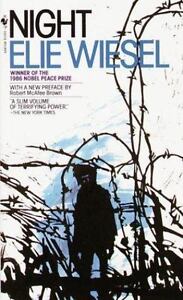
I originally read this book in high school. I picked it up again on a whim when I was without something to read one night. I was unprepared for its weight. As a younger reader, I remember not being that taken with the book. I found it oddly distant. I felt like I never really found my way into the characters' heads. But on this second read, I'm thinking that the author did this on purpose. It strikes me that the book is something of a facsimile of a nightmare, a kind of waking dream in which inconceivable, surreal moments seem to drift in and out of one's consciousness without the small details that suggest reality. Perhaps this was obvious to everyone else on their first read. Regardless, this is not easy reading. But it is important reading. It is important to know what we humans can do to each other - so that we may more bravely make the choice to do the opposite.

Monday, October 8, 2018

Desert Solitaire Part 1

Desert Solitaire by Edward Abbey

There is something about Edward Abbey's voice. It is so self-assured, so...irascible? In this book, it comes out of the desert, a recollection from the past of a season spent working for the Park Service at Arches National Monument. I've read Abbey's other famous book The Monkey Wrench Gang, and liked it. But I picked this one up for research, hoping it will help me build out a Wilderness Studies course I'm working to build.

Anyway, back to Abbey's voice: It somehow demands a response. He is clearly provoking the reader in his rants about "progress": "...why is the Park Service generally so anxious to accommodate that other crowd, the indolent millions born on wheels and suckled on gasoline, who expect and demand paved highways to lead them in comfort, ease, and safety into every nook and corner of the national parks?" His answer is pretty black-and-white: money. But, of course, the real answer is much more complicated than that. There is a way in which accommodating these so-called "Wheel-Chair Tourists" is a boon to the natural landscape Abbey so clearly thinks they destroy. Because there is no such thing as "pristine" -- or, in the words of the Park Service mission, "undiminished" -- wilderness. Nothing in our world can now be said to have escaped the hand of man, and it hadn't in Abbey's day either. And much of what we perceive to be untouched is actually quite heavily managed so that it seem that way. As a result, wilderness often requires money to preserve and maintain, and that money must come from somewhere. Better "Wheelchair Tourists" than oil companies paying for leases.

At least that's what I'm thinking on this night. What I'm loving about Desert Solitaire is the way in which the author draws you into his world, one in which nothing can be more important than wild country. He is, at least in his portrayal, doing what I have often said I'd long to do: Go away, far from people, and be alone in a landscape. I've never really done it, and I'm not sure if I really want to. Earth is the right place for love -- of people as well as of land. And so it's always felt more enjoyable with company. In a sense, he, too, isn't alone: He has his future readers. Did he think of me? Someone like me? Am I his intended audience? I don't know, but I'm enjoying his "Romantic dreams, romantic dreams."

Wednesday, August 29, 2018

There There

There There by Tommy Orange

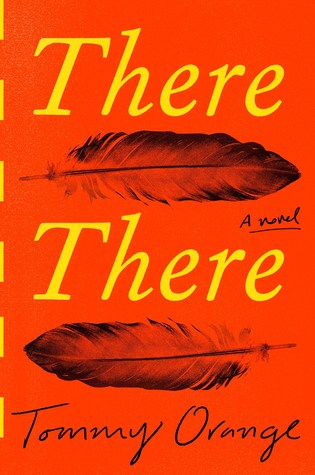
This compelling story offers a new, often untold perspective on the Native American experience. It's title comes from a famous Gertrude Stein quote in which she proclaimed, of her hometown of Oakland, "There is no there there." Though often interpreted as a derision of San Francisco's less fortunate neighbor, in fact, this author points out, Stein was really lamenting the passage of time, pointing out that the Oakland she once knew no longer existed. Either way, it seems as though the quote plays a central role in the story Orange is trying to tell, that of Native Americans who live, often unseen and unconsidered, in America's cities. Sherman Alexie and Louise Erdrich have written extensively about life on rural reservations; the same is true of American news publications. As a result, perhaps, popular consciousness places Native American culture in these locales. Orange seems to be trying to expand the idea of where Native Americans live and who they are by drawing attention to what it is like to navigate this identity in the urban environment. He seems to be trying to say that there is a there there. Then again, if this is the case, I'm not quite sure what to make of the ending.

Image result for There There


The Book Thief

The Book Thief by Markus Zusak

Well here's a book I couldn't put down. This is a story of the Holocaust told from a perspective I hadn't quite considered: Death. I hope that doesn't give too much away. It's an interesting point of view that underscores the way death permeated Nazi Germany in the 1930s and 1940s. It was a time of death for lives, of course, but also of livelihoods, literature, friendships, art, freedom, and, for many, hope. This book tells the story of how one young adolescent refused to allow her hope to die during this time through a hard-fought relationship with books. It affirms the power of literature as well as the resilience and persistence of young people in the face of the worst of times.

I appreciated this book on a number of levels. I loved the short chapters, each one a tale in and of itself, that propelled the story forward. I also liked that the book wasn't just driven by plot; it's full of reflection about life, death, and everything that happens in between. It's a heavy topic, to be sure, but definitely worth a read.

Saturday, June 23, 2018

West with the Night

West with the Night by Beryl Markham

The author of this memoir is best known for her daring journey by plane from England to North
America in 1936. She was the first person to cross the Atlantic in a plane going from east to west. But that feat is almost an afterthought in this book. It is the story of her finding a place and passion in the world, as well as of the setting -- colonial Africa -- in which she did it. She began as a horse trainer, a skill she picked up on her father's farm, and then graduated to bush pilot, almost on a whim. After a successful career spotting elephant for hunting guides, she traveled back to her birthplace of England, from which she launched her most famous flight.

This book has many strengths. The first is its prose. Ernest Hemingway famously wrote that Markhams' writing made it "completely ashamed of myself as a writer." She certainly does have a way with words, using them to both help the reader enter into a story and to muse about the larger significance the story might have for her -- and for the reader. Here's one passage that struck me, in which Markham describes a plane, abandoned in a grassland, that once held a pilot she had been searching: "There are all kinds of silences and each of them means a different thing. There is the silence that comes with the morning in a forest, and this is different from the silence of sleeping in a city There is silence after a rainstorm, and before a rainstorm, and these are not the same There is the silence of emptiness, the silence of fear, the silence of doubt. There is a certain silence that can emanate from a lifeless object as from a chair lately used, or from a piano with old dust upon its keys, or from anything that has answered to the need of a man, for pleasure or for work. This kind of silence can speak...With the water bottle swinging from my hand on its long leather strap, like an erratic pendulum, I walked around Woody's plane...The silence that belonged to the slender little craft was, I thought, filled with malice -- a silence holding the spirit of wanton mischief, like the quiet smile of a vain woman exultant over a petty and vicious triumph" (49). There is also plenty of adventure and suspense in this story, and of inspiration, too.

Missing from the book is any real awareness of the harm inflicted upon Africa by the very colonialism that afforded Markham the opportunity to achieve what she did. Perhaps this is to be expected, and forgiven, given that it was written in the 1940s. Or maybe it is enough that Markham took on the patriarchal system that accompanied paternalistic colonialism. Either way, the book is as good as Hemingway said is is.